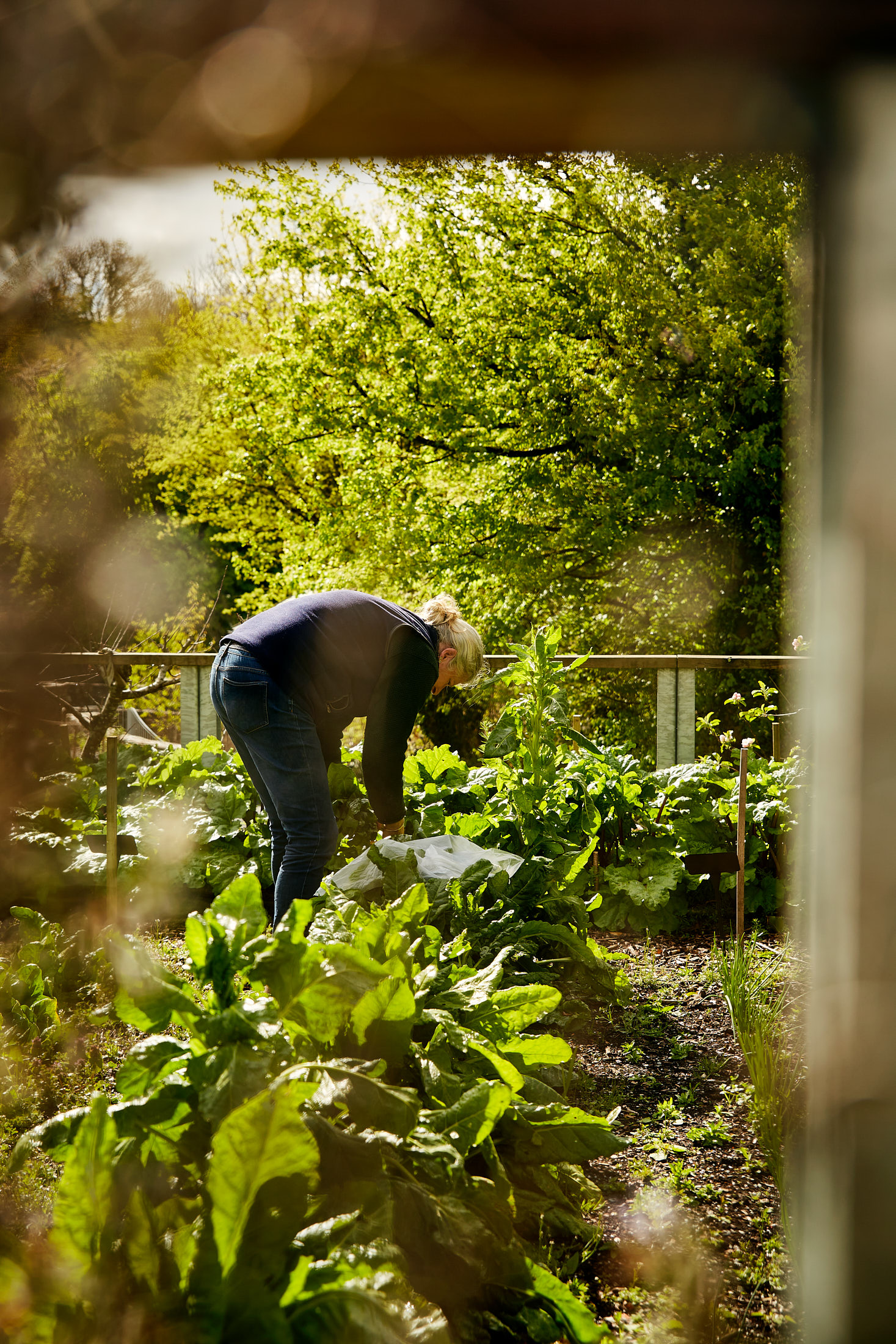
As we tip into January, and calls for diets and detoxing wash over us from every direction, we’re approaching wellness in our own way. January at Fowlescombe Farm isn’t about restriction but realigning with the rhythms of the land. As the farm slows down in winter, so does the food: broths, ferments, slow-raised and even slower-cooked meats, mineral-rich greens from the winter beds, and hardy perennial herbs whose flavour and health benefits alike transcend the seasons. It’s a time for thoughtful nourishment, comfort and honest connection to where our food comes from, and what wellness really means when it is guided by soil health, seasonality and regenerative principles.
But what does eating really look like at a regenerative farm stay in winter? From ferments and pickles to bone broths from our own lambs and greens that thrive in cold soil, this is how we are rethinking wellness from the ground up this January.

Eating with the Seasons
At Fowlescombe Farm, the season decides what’s on the plate. But the benefits go far beyond flavour. Our bodies are biologically attuned to the rhythms of the year, craving exactly what the season naturally provides. Cooling foods in summer, heartier and warming in winter. It is intuitive eating at its simplest.
Nature gives us the food we need, when we need it. Now, in winter, root veg gives us carbs and fibre to sustain us, brassicas keeping our immunity up against flus and colds doing the rounds with fierce determination. Fruit and vegetables harvested at their peak are higher in antioxidants, vitamins and minerals too.
The moment something is picked, its nutritional value begins to wane; eating with the harvest captures all of the nourishment and having it on plates almost immediately means the body sees the benefit. It’s more sustainable too, with far fewer food miles and lower energy use than forcing out-of-season produce into our diet.

Soil to Gut
Healthy soil grows healthy food, and healthy food means a healthy body.
Our gut and the soil beneath our feet have more in common than you might think. Both are living ecosystems, teeming with trillions of microorganisms. When soil is alive – diverse, undisturbed and free from chemicals – it produces food able to support a far more diverse and resilient gut microbiome.
Regenerative farming avoids harsh chemicals and tilling, preserving the soil’s natural balance and allowing vitamins, polyphenols and microbial diversity to thrive. At Fowlescombe, your food grows is living soil: vegetables pulled hours earlier from beds rich with compost and biodiverse networks, meat from pasture-fed animals, whose own diets and grazing patterns play their own important part in soil regeneration. Regenerative farming feeds the land and allows it to thrive, creating produce that allows us to do the same.
With our gut microbiome playing a central role in everything from digestion and immunity to mood, it’s the most important (and perhaps simplest) place to start on any January wellness journey.

Bone Broth
Bone broth may have been one of 2025’s wellness buzz words, but its benefits have been known and celebrated for millennia. The Chinese know it as ‘longevity soup’ and Victorian kitchens, like that once found in our own Fowlescombe Farmhouse, saw bone broth not as a by-product but as a sign of culinary skill and resourcefulness. For housekeepers and chefs of the time, a good broth – cooked low and slow on the range – formed the backbone of many a dish, stretching what was available and ensuring nothing from the animal went to waste.
At Fowlescombe, we make our own bone broth for many reasons. Our animals are raised slowly, regeneratively and with care, with respect for both land and life. Making bone broth with our Shorthorn beef or Manx Loaghtan lamb is a way of honouring and using the whole animal, always ensuring nothing is wasted. Different bones bring different qualities and taste: marrow for richness, knuckles and joints for gelatin, roasted bones for depth of flavour. Bone broth serves as the heart for the sauces served with our meat, the base for our winter soups and risottos.
On days when a bone broth simmers, its smell fills the Refectory and drifts well beyond, a little like the benefits of broths for wellness: rich in collagen for healthy joints, skin and hair, full of amino acids that act as a natural inflammatory and calm the nervous system; and heavy in minerals like calcium and magnesium. Unlike the processed versions that come packaged in plastic or dried in cubes, real bone broth carries real nutrients that our bodies are crying out for in colder months.

Fermentation
On a farm, or in a garden, nothing arrives in pre-ordered quantities. When the radishes are ready, they’re ready. When the beetroot thrives, it really thrives. And don’t get us started on the courgettes…
Fermentation allows us to preserve peak-season freshness for future season plates, capturing the abundance of the garden, reducing waste, and in the context of wellness, supporting gut health. It is one of the oldest forms of preservation, the methods largely unchanged for thousands of years and the benefits as old as time.
Ferments appear on the Refectory table not as afterthoughts or sides, but as bright, sour, layered elements that play their own starring role in a dish. An acid dash beside Shorthorn beef, a crunch with charcuterie, a tang to balance the creaminess of goats’ cheese. You’ll find them on the menu most days. As a waste-free kitchen, fermenting is one of our favourite ways to find new life in a jar for the bits that would otherwise find themselves discarded: the beetroot tops, chard stems and such.
Fermentation creates the most delicious dishes but it isn’t all about taste; eating fermented foods is exceptional for our health. They are alive and full of good bacteria that balances our gut, improves digestion and immunity, and can even lift mood thanks to that old gut-to-brain connection. And because everything we ferment has been pulled from chemical-free soil, it is thriving with microbes for a double-whammy of wellness.